From Administrative Professional to Author: Tara M. Sims on Publishing, Reinvention and Life After 50
For this installment of The Rewrite, I spoke with Tara M. Sims, founder of Evolved Assistant and author of the book by the same name. We talked about how publishing Evolved Assistant in 2024 helped open new professional and financial doors, why she is working to rewrite the narrative around administrative professionals, and what it has looked like to build a new chapter of her career and life after 50.
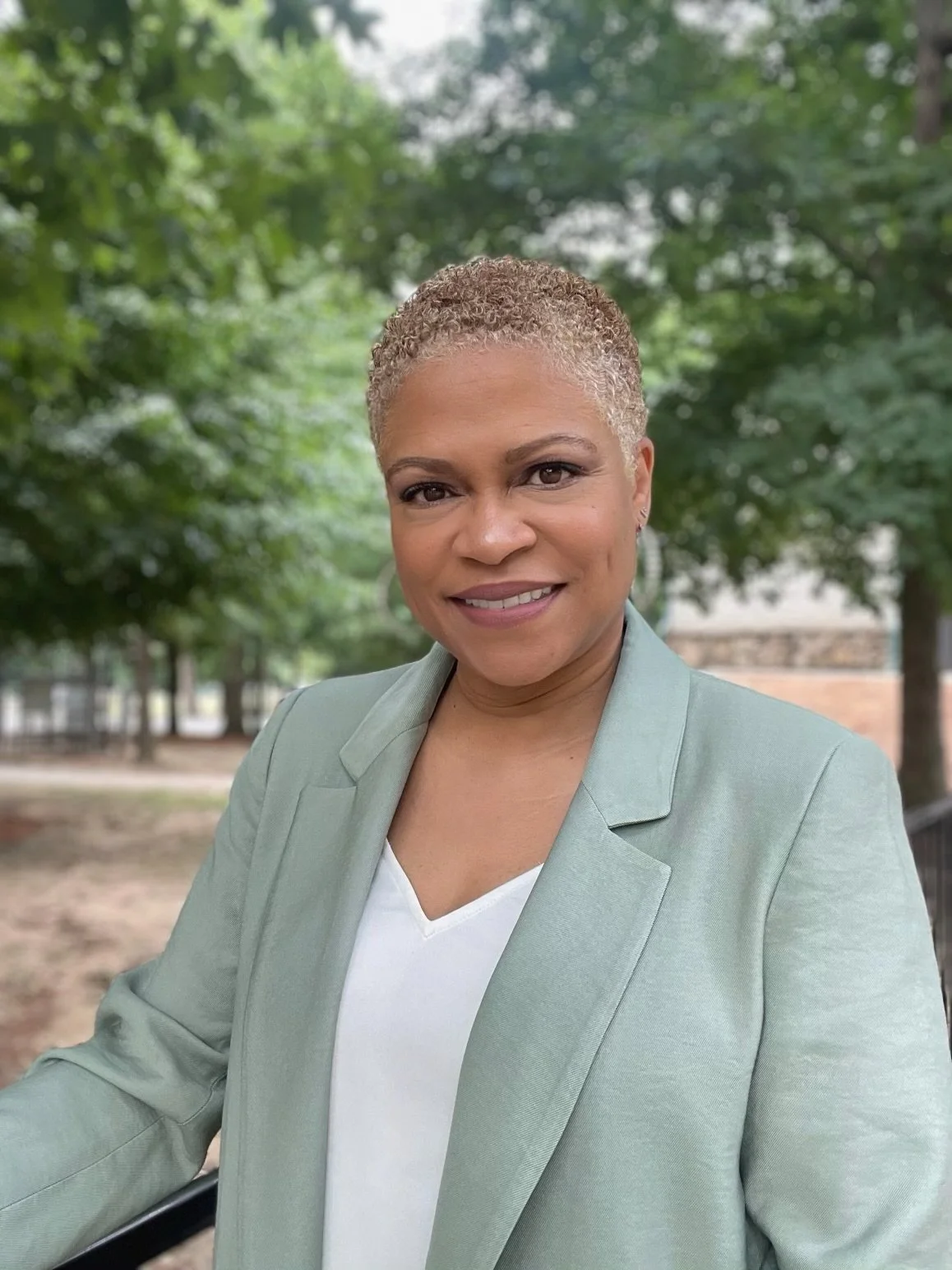
Tara M. Sims, Evolved Assistant Founder
This conversation has been lightly edited for length and clarity.
Aja: You have Evolved Assistant, and that has really been where your brand is right now — the speaking engagements, the community, the book, all of those different things. But I know through working with you that you have a really interesting career path. From what I remember: being a hairstylist, being in college admissions. So I wanted to start off with you talking a little bit about those separate seasons of your life and how they led to where you are today.
Tara: It's funny, because when I sit down with a group of assistants, all of them can relate to this notion that we fell into the career of being administrative professionals. I don't know many assistants who set out to be like, "Hey, when I grow up, I want to be an executive assistant."
I started my career in college recruitment because I really didn't know what else I was going to do. My degree is in psychology, and I had no intention of getting an advanced degree, at least not at that time. And I'd had a good college recruiting experience when I was applying for colleges myself, so for the first 11 years or so out of college, that's the kind of work I was doing.
At some point it occurred to me: while I like this work, I don't know that I see myself staying here. I wasn't interested in becoming a director of admissions. I just didn't see that as my goal.
I went to college in Ohio and worked at my alma mater. When I left Ohio to move to Atlanta — because I'm a Southern girl, and I was trying to get closer to New Orleans, which is home for me, without actually moving to New Orleans — I worked for the Art Institute of Atlanta for about two and a half years.
One of the things I had always wanted to do, going back to high school, was become a cosmetologist. So I decided in my early 30s, with grown woman bills and a mortgage, that I was going to go to beauty school. And everybody was like, "Uh, okay."
I set out on a mission to find a job that would give me the flexibility to go to school in the evening, because I had to work full time. I had full-grown woman responsibilities. I had a mortgage. And I got a job working for a regional bank that happened to be across the street from the beauty school — which to me was nothing but the Lord's hands in the mix, because how lovely was that? I was able to work in a bank, have banker's hours, and still have time to be a student in the evening. I did that for two years, graduated, passed the boards and got my license.
But I actually never did hair full time. The bank got purchased, and I was in need of a job again. I couldn't just jump out there and try to build a clientele without any real money coming in. So I got back into an administrative role.
When I was going to beauty school and working in my very first assistant role, I realized that I was really good at it, and I really liked it. I'm a linear thinker. I'm somebody who can come into an organization, see what's broken, and come up with a process and a plan to fix it. Those things are innately in me. It's just who I am. So many people are working in roles they don't enjoy — to find that combination that early in my career was really nice.
When the bank got bought, I was like, "I've got to find a job." A friend of mine was an executive at Kellogg's, and she said, "Hey, I'm in need of an assistant. Would you be willing to move to Michigan and come work for me?" And I said yes. That really set the rest of the pathway. I never did hair full time — I did it part time for a very brief stint — but that decision to go to beauty school, and then having that opportunity at the bank, really changed the trajectory of my career.
Aja: Once you got into the assistant role — I know you said you enjoyed doing it, but was there a point in time when you said, "Okay, this is going to be my career from here on out"?
Tara: Honestly, I think I was just going along with what was coming in front of me. I knew I liked the work, but because the bank was bought and I needed real income, I couldn't decide, "Okay, well, I'll just wing it and build a clientele." And then my friend offered that opportunity to me.
What happened when I moved to Kellogg is that I noticed the assistants who worked there were really like the connective tissue within that organization. They were in meetings with executives. They were running projects. They were involved in a way I had never seen before — because remember, I was coming from a small regional bank where there were maybe two or three of us as assistants. It was a totally different environment. Then I fast-forward and I'm at the corporate headquarters of Kellogg's, a huge company. It was really my first glimpse into what the role could look like.
But I still wasn't thinking, "This is where my career is going to continue to grow." I just wasn't thinking about it at the time — and I think people can relate to that. You're kind of just going through your life. Because I enjoyed the work, I wasn't in this space of, "Oh, I've got to figure out what's next." I was enjoying the work. I was learning. I was an integral part of the team and the executive I was supporting. I was getting good responses about the way I was showing up in the work. So I just kept going.
Aja: What do you feel like underlies the fact that you were able to make this move into beauty school in your early 30s? That's not usually the time people are making a transition from a decade-long career into beauty school. And then to make this other transition into being an administrative assistant. What do you think is the secret to being able to make those jumps that aren't necessarily the typical career path?
Tara: I think the answer to that is just in who I am, the way I was reared, and the messages I received as a young person. Anybody close to me will tell you I am not afraid to shake things up in my life. I just don't have a fear that would hold me back.
Now, don't get me wrong — I'm somebody who will research and take the time to get clear about what that next move will potentially look like, because I am very detail-oriented. I'm very thoughtful. And I'm not going to say I'm not afraid of change — in some ways, I welcome change. When I've been doing something for a long time, I am notorious for being like, "Hmm, I've been at this for a while. Let me see if I can switch this up a bit. What's next for me?"
So it's hard for me to package that up and give it to somebody. My mom told me I could do anything I wanted to do. And as I've moved through my life, when I figure out what those things are, I do the research and put the wheels in motion. I also trust that God's got my back. I'm not doing anything I think is irresponsible when I'm making these decisions. But the truth is, I've always known when it's time for me to do the next thing. Those things are in me. I can't connect it to anything but God. And I don't let any fear I might have, even just a little bit, stop me.
I grew up in New Orleans, and for anybody who knows anything about New Orleans — New Orleans people do not leave New Orleans. They stay there for the rest of their lives. It is that kind of culture. And I knew I was going to go away to college. I had big, big ideas about it — Boston University, Villanova, USC, places all over the United States. Ultimately I ended up going to college in Ohio.
But one of the lessons that sits with me is what my mother said to me.
She said, "Let me say something to you. I want you to go wherever you wanna go and experience something outside of New Orleans, this little box you've been in all your life. And if it doesn't work out, you can always come back home."
I think about my life in that way. If I go somewhere, take another job, jump up and move to another state — when I left Atlanta to move to Michigan, everybody was like, "Wait, what? You're going to Michigan?" It's like, listen, don't hitch your wagon to me. This girl will get up and ride out. But I always knew that if it didn't work out, I could do something different. That kind of thing was instilled in me as a young person, and I use it as the lens through which I navigate my life. If I decide there's something better waiting for me over here and I want to pursue it, and for some reason I was incorrect about that — I can always come back or do something different.
Aja: I really love that from your mother. That sense of being able to come back home, reset if it doesn't work out — instilling that confidence in you to have that flexibility.
Tara: It's in my mind forever. When I left Ohio in 2003 and came to Atlanta, I loved Atlanta. But when that opportunity presented itself to go work in a larger corporate environment as an assistant — that was around 2008 or 2009 — in my mind it was, "This is a great opportunity, and I can always come back home if it doesn't work out." That's the lens by which I move through my life, honestly.
Aja: Is that confidence behind what allowed you to jump out on the ledge with the book? I'm thinking back to when we first started working together — you had a different book idea initially. You were talking about executive assistant to virtual assistant. And over time it transformed into the Evolved Assistant idea. I remember you came in with a confidence about the project in a way that a lot of people don't when they're starting something completely brand new.
Tara: I had no clue what I was doing. But I was like, "Yeah, I know."
Aja: But you knew you were going to figure it out — which is one of the reasons it was so great to work together. So tell me how the book idea started to take shape and how that transition happened.
Tara: I'll give you the backstory. For many, many years, as someone working in the administrative profession — as most might imagine, it's not like I spent my career making big bucks. This is not a career where you come out of the gate making six figures. It's some work to get to a certain place financially in this career in particular. So for many years, I thought about: what could I do that would allow me to generate another source of income?
I saw this girl on Instagram talking about her virtual assistant business, and she had a self-paced course — I think I spent $199 — on how to start a virtual assistant business. This was happening during the pandemic. I know the pandemic was a rough time for a lot of people; there was a lot of loss. But for somebody like me, who is really introverted and could live in a bubble and work in a bubble, it was a great time for me to slow down and think.
So I take this course. Long story short, I start a virtual assistant business based on what I learned. I start making money. I then create an agency — I hired assistants, contractors, to be a part of it. The contractors I had were all full-time executive assistants or administrative assistants, so it was a little bit of a boutique agency. And I'm thinking to myself, "Girl, you need to bottle this up and tell people about this idea that you can be a full-time administrative professional and still create this additional source of income." Because again, a lot of us didn't make a lot of money as administrative professionals. It was also an opportunity to learn how to support a small business owner — if you work in large enterprise, it's very different. You're learning new tools, new processes, someone else's business.
So when I first got connected with you, I thought, "This is it. This is the book." Assistants everywhere need to know they don't have to rely only on the experience they're getting and the money they're making in their full-time gigs. They could start their own thing, generate income for themselves, and expand their skill set. Because a lot of times, assistants in the workplace aren't really considered when it comes to professional development. You can be an administrative professional and feel stuck and stagnant — not growing, not developing. And this thing I had discovered, I was going to package it up and put it in a book.
Until I sat down — and I credit her with this — with one of our senior vice presidents where I was working, who was over our communications department. I had a really good relationship with her; I said, "Listen, I'm about to write this book. It's going to be EA to VA." I had the title and everything.
Aja: Yes. We were ready to go.
Tara: We were ready to go. I had sent you the outline. And she said, "Tara, you're over here in a Fortune 30 company supporting a C-suite executive, managing a team of assistants. I understand you've discovered this virtual assistant thing, but your book needs to be about what you're doing right here in this space. You are coaching, you are empowering, you are training, you are educating assistants to take their skill set to the next level and take their support to the next level. That is what your book should be about."
When she said that to me, it was like a light bulb went off. Ding, ding, ding, ding. You might be right.
The other thing about the VA idea: because I worked in a Fortune 30 company — and any of your listeners who work in these corporate spaces with side hustles know this — sometimes these corporate entities don't necessarily want you out here doing all kinds of other things outside of your 9-to-5. So that, combined with the fact that what she was saying was right. I had become the first manager of administrative services within the company, based on a role I pitched to the president at the time — me managing a team of assistants.
My story was worthy of sharing, and the things I was doing in the space were also worthy of sharing.
My whole approach to the way we show up at work as administrative professionals, and this idea that the workplace is changing rapidly — we are missing an opportunity if we don't think we, too, need to develop.
There are so many assistants who have worked in corporate spaces doing the same thing year after year after year, and that does not work any longer. When the pandemic hit — I talk about this in the book — a lot of the tasks associated with our role literally disappeared. Booking travel, in-person meetings, all these task-based things. I encouraged my team at the time to start thinking about: how do you add value now that all these things have been removed?
So when I sat down and had that conversation with her that day, it was the light bulb moment I needed. And again — the Lord sent me into that office to have that conversation. I don't know that the EA to VA book would have been as successful as Evolved Assistant has been, or that my passion to talk about it would have remained the same. I don't even have a virtual assistant agency anymore, because the truth is, Evolved Assistant has taken on a life of its own. That's where my energy and focus have been. I feel like I've made a great contribution to the administrative thought leadership space, and I'm continuing to do that.
Aja: I want to talk more about that big life of its own. But before that — one of the biggest things I liked about your story and your book is that you are rewriting the old narrative around what an administrative professional is, and showing what that can look like now and in the future. What is the old story people tell about administrative professionals? And what is the new story that someone in this profession needs to step into?
Tara: The old story is very much rooted in the belief that the administrative professional is there to do the work nobody else wants to do. The work that is task-oriented, not necessarily business-impacting. The old narrative is also that this is not an employee population that we as an organization should be developing or pouring into — or even giving specific feedback about the way we show up in the work. I can't tell you the number of assistants who say they went years without getting specific feedback.
So the old narrative is that we were underdeveloped, not necessarily cared for. Every other role in the organization has some sort of training or professional development — why would ours be left off the table? Because the work we were doing was seen as task-based. Stuff that gets things done, but not necessarily moving the needle on the business.
Today, that's very different, and for a lot of reasons. One, the pandemic escalated it. With a lot of those in-person things going away, companies started thinking about assistants in different ways: "Do we need all of these assistants? What is it that they're doing that's really adding value to the organization?" The other thing that's changing is technology. We're in a rapidly evolving technological world, and assistants can no longer sit in these spaces without evolving and learning the technology. And leadership is getting younger. Some of the things assistants were doing for Boomers and Gen Xers — and I'm a Gen Xer — these younger executives don't need. They can do all the tech stuff. They don't need you to come in and set up their Teams meeting. They got it.
So the message when I go out and speak to assistants now is, number one: all of us need to be really clear about how we add impact within the organization. And I'm not talking about the tasks we perform. The tasks are important, because they need to get done. But I'll give you the example I give to audiences.
Years ago, my old boss — president of a Fortune 30 company — would draw these stick-figure notes for me and ask me to create presentations based on his little drawings. He wasn't super tech-savvy. So I would create this PowerPoint that he would use in meetings where major decisions were being made within the organization. One of the things I tell assistants is that we've got to get clear about how we speak about our contributions. You could look at something like that and think, "Well, that's just a task — he needed a PowerPoint, I put it together." But the truth is, what I pulled together allowed him to go in and clearly communicate whatever business initiative he was trying to move forward, in a room with leaders at the top of the organization.
We have to think about our work in a bigger way, in a more impactful way. Not "I made sure Bob got to Florida and made it to his hotel." That's important to the people we support, but it's not moving the needle on the business. There are a lot of things assistants do — we clear roadblocks, we manage relationships, we manage personalities. A lot of what we do is invisible. And in order for it to become visible, we have to speak about it: "I know everything went smoothly, but I want to make sure you're clear that I had to do X, Y, and Z to make sure the following things happened without a hitch." Because nobody's necessarily thinking about us. So first and foremost, we have to think about ourselves.
The second big thing I tell assistants: earlier in the year, I was sitting on a call, and this woman was talking about — you hear people talk about IQ, you hear people talk about EQ, emotional intelligence — and she mentioned something called AQ. I thought, "What is AQ?" She started talking about assistants being able to increase their adaptability quotient. Because of the amount of change all of us are experiencing in the corporate workspace, assistants need to be able to adapt in a way they've maybe never been required to before.
Think about AI right now. I tell assistants all the time: this message is not meant to scare you. But the truth is, organizations are spending a lot of money investing in AI so that the things they need to get done, get done more efficiently, with less overhead — and people are losing their jobs as a result. The assistants who are really going to thrive in the next five to ten years have to be willing to approach AI as a tool that helps them be even more impactful in their roles. You can't be afraid of it. You need to leverage it, understand it, know how to utilize it in a way that showcases that you are impactful in this work.
We need to be thinkers. We need to understand what's happening within our organizations so we can better contribute. If you don't know what your organization's goals are, or your leader's goals, how can you effectively contribute to them? Anybody can throw something on a calendar. But the better you understand what your executive, your team, or your organization is working toward, the more effective you can be with the things you're responsible for.
Assistants now are in the meetings. They're in boardroom meetings. They're project-managing things. That's not the story of yesteryear. And the other advice I'd share: even if you don't see it happening within your organization, be the first one to raise your hand — for the stretch assignment, for the opportunity to be in the room. Every assistant I talk to can relate to this: you've been given the responsibility to make a meeting happen, you're responsible for all the logistics, yet no one included you in the initial conversations about it. You're executing without the full picture. You need to be able to go to someone and say, "I understand my responsibility here is the execution, but you should be clear that without me being in the room, there may be missed opportunities — because maybe you're talking about things I can offer suggestions for, or I can take that information and make sure this process gets done better."
We just have to be a little more vocal about the way we can help the business move forward. Yesteryear's story was much more about being in the background, handling the tasks nobody was that interested in.
Aja: You talk about the ways corporations seem to underestimate assistants, and also the ways some assistants underestimate the amount of power they actually hold in their roles. Where do you think that comes from — on both ends? Why is it such an underestimated space?
Tara: I think it's underestimated because it's always been that way. For a lot of executives in particular, until they've had a dynamic assistant — someone who is going to challenge the way they've been utilized before — they have no picture for that. They don't know how to elevate it if we don't say something about it, in some instances. I think the majority of executives sort of take what they get as it relates to what assistant they get. And the onus, whether it's fair or unfair, is really on us to showcase what we can contribute. It's because of the history of the role.
And the other piece of this — I said it in the book, and I say it every time I speak:
Nobody is coming to save you from feeling stuck, undervalued, unheard. Nobody's coming to save you from that. The onus really falls on us.
People have the perception because it's the history of the role. It's the way it has always been. And until they start to see us step up in a way that challenges that perception, it makes it harder for things to change.
Now, I'll also add: just like any profession, there are assistants who want to challenge the status quo, and there are assistants who want to mosey along and keep doing whatever they've been doing. But for those who are really looking to grow and develop — which is the audience I'm speaking to — if you're looking to expand, to be seen as more than someone handling the tasks, then you've got to be willing to challenge people. You've got to be willing to open up, step up, raise your hand, ask to be in the room, ask for the stretch assignment. You're going to have to jump in, because this is really your responsibility, ultimately.
Aja: Do you think part of it comes from the gender aspect? I know all assistants are not women, but it's heavily weighted toward women, especially historically. I found your book so empowering — I've never been an assistant, but just looking at the career path in general, and as women, there's often a hesitancy to speak up, a hesitancy to lead, to see yourself beyond supporting — to both lead and support.
Tara: A little bit. It's the historical thing. But I also say to assistants: the skill set that we have — our ability to put structure around chaos, to operate in the fine details, to call out something that's broken and suggest a better, more efficient, more productive way to do it — is a leadership skill set. And not everybody has the ability to do it. Our executives, nine times out of ten, could never do the things that we do.
So we have to think about ourselves as part of the success of the people we support. I was just talking to a group, and I said exactly that: I wish I had thought about myself in this way earlier. I am part of the success that I support. And when you take on that mindset — that you are part of the success that you support — then you have to think about the fact that I, too, need to develop, pour into myself, grow, learn, and expand, just like the executive. Make the investment in myself.
So yes, the historical piece — the fact that it was mostly women and continues to be — still plays a part. But we have the opportunity to change that narrative. It's got to be us that makes the change.
And confidence — I talk about that when I speak with groups, too. You think about org charts, where someone sits on the hierarchy, and maybe you think to yourself as an administrative professional, "I don't want to challenge something they've said," or "I don't want to disagree," or even offer an alternative way of doing something. But that's really our expertise. Your executive is not that successful if they're showing up to meetings unprepared, if their calendar is set up such that they're in meetings they don't even need to be in, if they can't focus on the things that really matter because you've got them back-to-back-to-back. There's a level of strategy involved in that, and we have to recognize it as such — and communicate it in a way that other people recognize it as well.
Aja: I want to ask about the fact that after the book came out, you didn't stop at "I'm a published author." You leveraged it into speaking engagements. You've built this community around it. Was that something you had in mind the whole time? Something that evolved after publication? Or a combination?
Tara: I think it was a combo. In my mind I thought, "Okay, yes, this will launch me into being able to do speaking engagements." But — listen, I have to give God the credit, because He just kept telling me, "Do this, do that, do this, do that," and I just kept doing things.
I wrote the book. I was already connected with some professional development organizations for assistants, and before the book even got published, I had my first speaking engagement. And everybody made it very clear to me: this book is not going to sell itself. You can't just write a book and disappear. Don't think that just because you, Tara Sims, wrote a book, people are going to come flying out of everywhere to get it. That's not how this works. Everybody was like, "You're going to have to start talking about this book."
Now, my introverted self — this was very uncomfortable for me. Posting regularly on LinkedIn, really building a following there — that was so out of the ordinary for me. But everybody kept telling me, "This book is not gonna sell itself, so you better get to talking." And I guess it did what it was supposed to do. I started building this community. People started reaching out to me for advice, for coaching, for speaking engagements, and I just kept saying yes, honestly. Things just started happening. Last year I opened up my calendar to speak with any assistant who wanted to talk to me — I was just offering time to people. So I spoke with assistants all year long, from literally all over the world. I wrote the book, I started talking on LinkedIn, and that set everything in motion.
Things kept coming, and I kept saying yes.
And that then led to the idea of creating a course. As I was out here talking about Evolved Assistant, I happened to make a post last year about the fact that I'm an administrative manager — which is not a career opportunity a lot of us see within organizations. When I said I was an administrative manager, meaning I manage a team of assistants, people latched onto that. And I thought, "Maybe this is also something I should be talking about," because there are not a lot of pathways built in for us.
You hear people talk about the chief of staff, but the truth is, the chief of staff is a totally different role from an administrative manager. A chief of staff, in my mind — although you see various descriptions — is more of a strategic leadership role. That person is part of the leadership team, in those meetings, helping move forward the initiatives of the C-suite leader. That's very different from being a regional administrative manager or a manager of assistants, because we're still more connected to the administrative work — the processes within the organization, being in the room with leaders to say some of these processes are broken, standardizing things so the business moves more efficiently. That just hits the high notes, but there's a lot more to it.
I wrote this post, and all of a sudden I got all this activity from people curious about the role. As a result, I started talking about it more, and I'll be releasing a five-module course on administrative management — showing assistants how to identify the challenges within organizations, the inefficiencies, the things that are broken, and then build a business case to pitch an administrative management role or a centralized or hybrid function for the administrative team.
I say all that to say: the book was the beginning. But once you start talking and putting yourself out there and opening yourself up to tell the world what you have, you have no idea what else is coming as a result. I never would have considered that I'd be building a course and doing all these things. It just came as a result of me talking about the book.
Aja: You came into the book wanting to help people, but also with the practical goal of opening up additional financial pathways. Do you feel like, looking back, you've reached the financial goal you were looking for in the beginning?
Tara: Well — when I reach the financial goal, I will no longer be working my 9-to-5. I'll be retired and sitting on a beach somewhere.
But here's what I have done. For someone who has spent the last 20 years or so working in the administrative space — again, not making tons of money — I'm much better today in my 9-to-5. I'm doing pretty well in that space. But as someone who hasn't always been super responsible with my finances, and as a single woman navigating my financials by myself: the book came out in '24, but this year I really saw a significant boom from a financial standpoint — the speaking engagements, still selling books, a course launching. And what it's enabled me to do is take a portion of that money — a pretty significant portion, like 60% of every check I get from building this thing — and contribute it to my retirement.
And here's a marker for you. When I first started, the goal was to pay off my student loans. Yes, I still have them — I've actually changed the trajectory of that a little bit. But I have the money to pay off my student loans if I wanted to, today. And it's the result of the book, the work I've done, and what has come from writing the book.
Aja: So many of us are in this space, over 40, looking ahead — feeling like, "Okay, I'm starting late. I'm trying to catch up. I'm trying to build something meaningful." If you could give a word of advice to somebody standing where you were some years ago, looking at how to build that bridge from here to there, what would it be?
Tara: So I'm over 50 — let your audience know that. I'm over 50. And it's not too late.
I think there's a level of intentionality people have to go into this with. What is your why? Get clear about what you're hoping to accomplish.
Mine was literally to pay off my student loans. I was like, "Okay, Lord, I gotta pay off my student loans." Now, I'm clear that I'm passionate about this — this is obviously my life's work — but that was the initial goal. So number one: get clear about what you're trying to accomplish. What's your intention? What's your goal? Be intentional about that.
The second thing I would say:
Be very careful about not focusing on the entire staircase, and focus on the stair in front of you.
What I mean is, as someone trying to do all of this while also working a full-time job, I would overwhelm myself in the beginning with all the things I needed to do. One of the things I had to learn very early on was to be patient with myself, recognize there's not enough time in the day to do everything I'm trying to do, and put one foot in front of the other. Sit down, make a list, get clear about your why, decide what you want to do, and focus on one step at a time.
You'd be surprised. I'm always amazed — and you and I have talked about this — at all the things that showed up for me on this journey. The people who showed up for me. The lessons I needed to learn as I was building this thing. Once you start and put the wheels in motion, you'd be surprised at what starts to fall into place or show up for you, if you're paying attention. The right people came along on this journey to help me put things in place.
It was not easy. Some of the hardest things for me were hiring people to help with things like building a website. I don't know the first thing about building a website. And yes, you hear people say, "Oh, you could just get on there and create your own" — I don't want to do that. That is not where my zone of genius lives. Finding the right person took multiple people. I spent money I didn't need to spend. It will get bumpy in the process. But if you're clear about what you're trying to accomplish, and you're patient with yourself, and you put a plan in motion and follow it — you don't know what's on the other side until you actually put the plan in motion.
And it's not too late. I literally sit down — right in front of me, you can't see it and I wouldn't show it to your audience — but I have a big Post-it note with 2026 written on it. As I was getting speaking engagements, I would go over there, write it down, put the date, and put the amount I was going to be paid. It's in front of me every time I sit down to work on anything related to Evolved Assistant. What I'm accomplishing is right in front of me. I also have my book royalties listed for every month, and I keep track of it right there.
So it's not too late — even at 50, even as somebody who wasn't always doing what I was supposed to be doing from a financial and retirement-planning standpoint. There's a lot of information available to us online, especially on the finance side. I follow a whole bunch of people on Instagram talking about how to invest. I've hired some people to help me, because I recognize I'm not an expert in those particular areas. There's a lot of information and a lot of people to help you.
And share what you're working on with people you trust. When I was starting the virtual assistant business, the woman whose course I took said, "You need to talk about what you're doing with the people in your network." One of my biggest and longest-standing clients in the virtual assistant agency happened to be my first cousin, who is like a brother to me.
The key is to just get started. Get clear about what you want to do, get started, and give yourself some grace — especially for those of us trying to do this in addition to 9-to-5s.
It's not easy, and it can be overwhelming. There were times when I didn't want to be bothered with the book. I had to walk away and be like, "Mm, I'm not interested in this." There was a time I didn't want to do it anymore. But I thought, "Girl, you said to yourself this is what you were trying to accomplish, so go on and get back to it." And I think now I'm really starting to see the fruit of all that labor.
Here's the other interesting piece. The administrative thought leadership space is small — there are not a lot of us — so I've built some relationships over time. And it's funny, because people say to me that my footprint seems so big, they think I'm doing this full time. I thought, "Really?" You don't always know the perception of the people receiving whatever you're putting out into the world. And I'm like, "No, your girl's got a full-time job. No plan on doing this full time." But when I heard that — and more than one person has said it to me over the last year — in some ways it was confirmation that what I'm putting out into the world is big, and it feels impactful. It feels like it's my primary job, when I'm not doing this five, seven days a week. I don't have the bandwidth. You can't know how the thing will be received until you start doing the thing.
Oh — and let me also add: there's a level of vulnerability that has to come into play when you're building something. Because this is stuff you're giving birth to, and if people don't like it... I often think that. "Oh Lord, what if people hate the course?" "What if people hate the book?" I still have those thoughts. But you can't let that kind of stuff get in your head, because it will slow you down for sure.
Aja: Now that you've accomplished all of these different things — what is next?
Tara: The course is obviously next. That will launch, I'm thinking, within the next 30 days — I've already started planting some seeds on LinkedIn that it's coming. I don't know what comes after that. Like I mentioned to you before, I've drafted out what a group coaching situation would look like, but I'm not sure that's something I could accomplish while also working a full-time job.
I just recently wrapped up with my first administrative management coaching client, and I do think that ultimately, that's the space I want to live in. I want to coach administrative managers, as opposed to administrative and executive assistants — because in my day job, I do that every day.
But here's the blessing: I don't have to know. I can just know when I know.
Because this is not my full-time bread and butter — I don't need this work to survive. The luxury in all of it is that I could wake up tomorrow and decide, "I think I'm going to take this in this direction." Or, I had a big year this year — maybe next year I won't do as many speaking engagements. I think that helps it stay fresh and fun, that I don't have to do it. So loosely: the course, administrative management coaching, and maybe group coaching down the line are what I think are in my future. But when you open yourself up to stuff, you never know what's lurking around a corner that might change the direction. Maybe next year I'll do even more speaking engagements. I don't know. And there's something cool about not feeling the pressure to have to know.
Aja: I really love that you've built something that sounds like a path of freedom, in a lot of ways, in your 50s — to be able to say that in a way that not everybody has the opportunity to do. I'm really grateful you've been able to talk to me and the audience about it, because I'm sure a lot of people are going to benefit from everything you've shared.
Tara: It's surprising to myself sometimes. Like — yeah, I know I did the work, but sometimes I have to sit back and say, "Girl, you have done a lot in the last three to four years." There was a time when, financially, I was on a real struggle bus. And again, I'm not out here with millions of dollars, but I'm definitely on a plan to make sure my life beyond working 9-to-5 can be comfortable — that I can have what I need. This work, as a result of the book, is helping to facilitate that, and will continue to in the coming years.
I'm fairly confident, but what I'm also clear about is that when you create something and see some success from it, it helps build your confidence. If I can do it once, I can do it over, and over, and over again. There's something really fulfilling about that.
The virtual assistant agency, for example — even though I'm not doing anything with it today, if I wanted to turn that on, I could turn it back on. I think for women in particular, once you see some success in something you've birthed and created, it's a signal to yourself that you can do it again — over, and over, and over again.
Aja: Thank you so much, Tara. Where can people find you? Where can they buy the book, join the community, bring you in to speak?
Tara: Definitely on LinkedIn — Tara M. Sims. The book is available on Amazon. And my website is evolvedassistant.com. Folks can reach out to me there for speaking, for coaching, and even to enroll in the course if they're interested.
Tara Sims is the author of Evolved Assistant and a speaker, coach, and thought leader in the administrative profession. Learn more at evolvedassistant.com.